Seaweed E-numbers (Alginates, Carrageens and Agars)
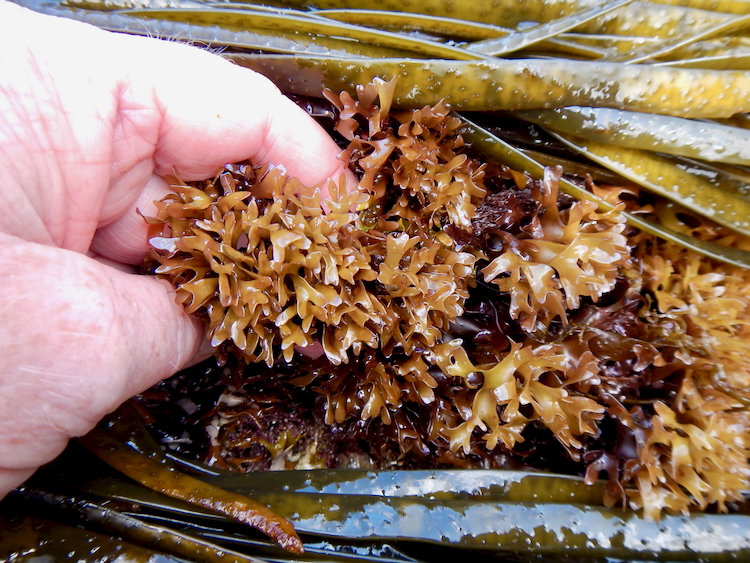
In the European Community, "E" numbers have been given to food additives and these can be identified in food labels from these numbers. Elsewhere, however, they often pass under a variety of names that often seem to be designed to occlude their origin. Here are some of the seaweed E-numbers and a few of their uses. "Philippine-grade" carrageenan (often referred to as Philippine Natural Grade or PNG, or Processed Eucheuma Seaweed/PES in Europe) is a versatile, cost-effective hydrocolloid derived from red seaweeds (Kappaphycus alvarezii and Eucheuma denticulatum). It is used primarily as a stabilizer, thickener, and gelling agent in the food and pet food industries. More information.
Please note that there is a lot of overlap in usage.
|
Product
|
E num-ber
|
Origin
|
Used as
|
Typical products
|
| Alginates and various derivatives (e.g. Sodium alginate, Propylene glycol alginate) | E400-405 | Large brown seaweeds such as Laminaria hyperborea, Ascophyllum nodosum and Macrocystis species | Emulsifier, suspending, stabiliser, gelling agent, thickner. | Ice-creams, milk shakes, instant desserts, custards. Suspending agent in soft drinks. Spreads and many others. |
| Agar | E406 | Mainly species of Gelidium, Pterocladia, and Gracilaria | Emulsifier, stabiliser, gelling agent, thickner. | Ice-creams, tinned goods, glazes for meats, etc. |
| Carrageenan | E407 | Mainly Eucheuma, Betaphycus, Kappaphycus, amd Chondrus crispus | Emulsifier, stabiliser, gelling agent, thickner. | Ice-creams, milk shakes, instant desserts, custards. Suspending agent in soft drinks. Spreads and many others. |